Showing posts with label Turkey. Show all posts

Tuesday, September 20, 2011

That one difference

One of the joys of traveling is seeing all the different ways of thinking and doing things other people in other places have.  It can be interesting, frustrating, terrifying, or hilarious - or a combination of all those.  These are some of those "one things" that struck me this spring in Greece and Turkey.

One of the most frustrating things about Greece (and possibly one of the things we found most humorous) was the fact that every site of interest (to tourists) was closed every Monday and after 3pm the rest of the week.  And when they said they were closed at 3, that really meant that they wouldn't allow anyone to enter after 2:30.  Now, I can understand wanting to have a day off, and I can understand the desire for a siesta...  But considering how huge tourism is in their economy, I feel like it would make sense to hire a couple more people for each site, so they could be open Mondays and maybe a little later in the afternoons.  The general (half-serious) consensus was that if Greece bothered to be a little more accommodating to its tourists, maybe it wouldn't be in quite so much economic trouble.

One thing that really struck me is how much of an international language English really is.  We met people from all over Europe, Asia, and the Americas, and English was always the common language used.  It struck me even more when people would ask where I was from.  The fact that I spoke English was not a dead give-away (and apparently to non-native speakers, accents aren't as readily distinguishable).  Sometimes in Turkey men wanting attention for their shop or restaurant would inquire as to our country of origin and then begin offering guesses.  To my surprise, some of the most common guesses were Irish or Australian.  We didn't usually bother to correct them.  It was a pleasant surprise to not be immediately tagged as American.

One of the funniest (and most annoying) parts of Turkey was their election process.  Here in America we vote for the guy who can sling the most mud at his opponent.  Apparently, in Turkey, they vote for the guy who can blare the loudest music from vans making their rounds of the larger cities.  Yes.  I know it sounds weird, but it's true.  Everywhere we went (Kushadasi, Istanbul, and Ankara, where we were when the election took place) we would see vans, plastered with the face of their candidate, blasting loud music as they made their rounds.  Once we even saw an armada: dozens of boats draped with flags and posters, rounding the Golden Horn.  Yes.  I will vote for you because you have boats.  And I like your music better.  Okay, I have to admit, I don't get it (and I didn't care for the loud music).  But really, it might be an improvement over a mud-slinging competition.

One occurrance that would never been seen in America took place when we were walking down by the Bosporus.  There was a bit of a traffic jam, probably caused by unruly election vehicles.  Traffic was at a stand still when we saw one man get out of his car, pop the trunk, grab a beer, and get back in the car.  (Apparently he then handed the beer to his companion, but still!)  I think I burst out laughing at that.

One word must, of course, be said about the call to prayer.  It was not a new experience for me to hear it five times a day.  However, the calls in Turkey were, in general, much more attractive than the calls I had heard in Israel.  Much more melodic.  There were, however, what we dubbed, "The Dueling Muezzins."  As one of the most famous mosques in the world, I suppose that muezzin of the Blue Mosque would want to stand out.  And, of course, in that area of Istanbul, there are several mosques in ear-shot of each other.  The Blue Mosque would start out, "Allahu Akbar, Allahu Akbar."  Except it would be more like "Allaaaaaaahuuuuuuu  Ikbaaaaaah-aaah-aaar, Aaaaaaaah-aaaah-llaaaah-aaaaaaaaahu Ikbaaah-aaaah-aaah-ah-ah-ah-aaaaar!"  But longer.  Once that first line was completed, that muezzin would pause and the muezzin from the nearest mosque would reply with the same line, but with more musical improvisation.  Back and forth they would echo.  Too loud to attempt to hold any sort of conversation.  Fortunately, they usually kept the total time to under ten minutes.  That was still quite long enough.  It got a little ridiculous.  Kind of like some worship bands in America.

One of the most randomly fun things was the birds that would fly above the Blue Mosque after dark (and to a lesser extent above Hagia Sophia).  I loved to sit and watch them circle in the lights.  It was a sad night when there was a power outage and the walk home past the Blue Mosque provided no circling birds.  

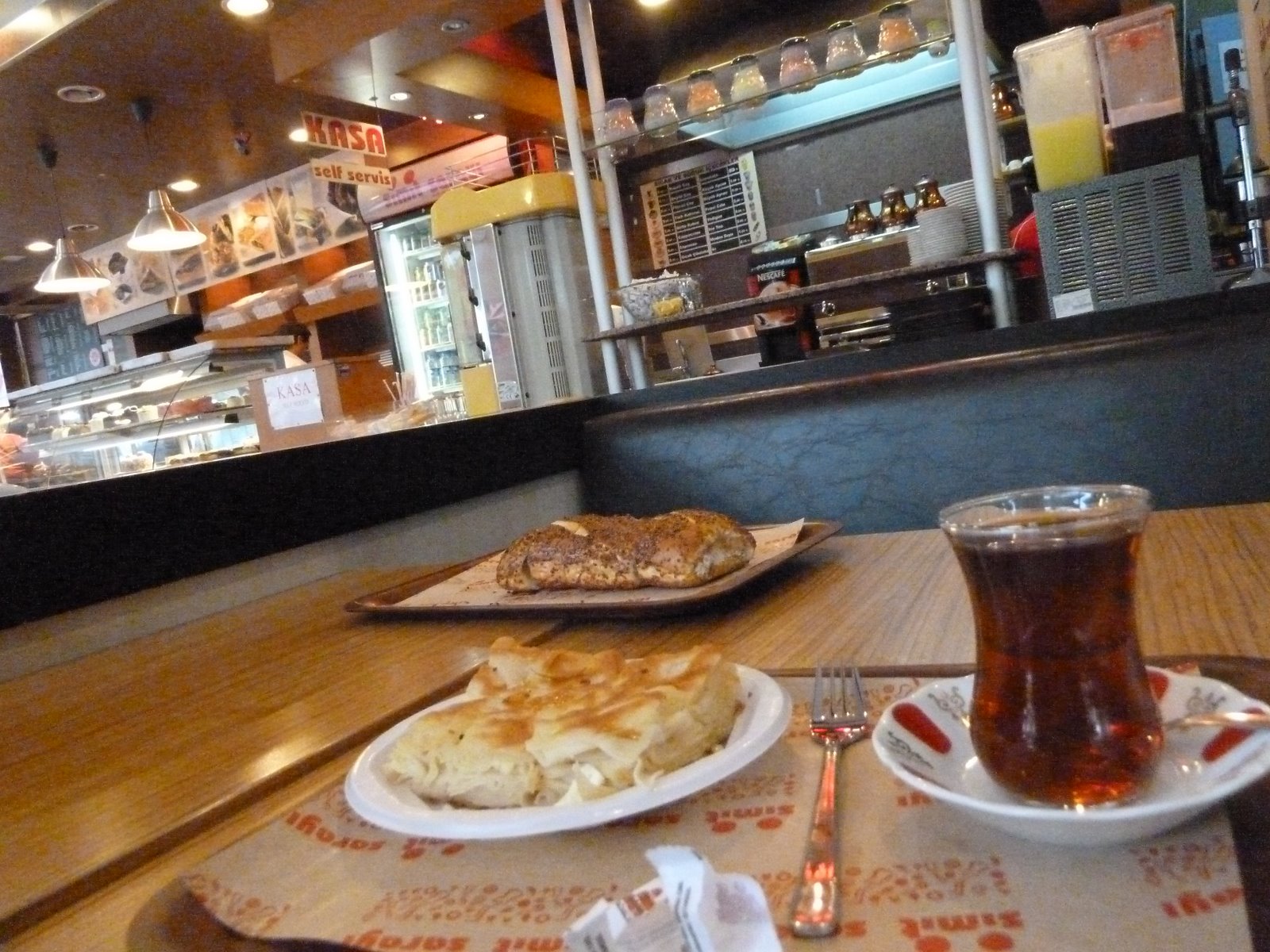
One food that deserves a special mention is, I think, durum cig kofte.  (Forgive the lack of accent marks and the like.)  From my understanding, this dish used to be made from finely chopped raw meat, but that practice has become more rare.  Now it seems to be made mainly from bulgar and maybe lentils or potatoes.  Totally vegetarian.  One night we were out wandering when we were approached by a vendor with some street food we hadn't seen before: some sort of wrap.  We asked him what it was and he said, "chicken."  We figured later that was probably the only English word he knew that would fit at all.  At any rate, we bought some and tried it out, delighted to find it rather spicy (a flavor distinctly lacking from Greek foods.)  It was, however, clearly NOT chicken.  We ran into it several more times on our trip, and eventually figured out what it was that we tried that night.  It even became one of our favorite cheap foods - a welcome change from doner.

One thing is certain: many more "one things" could be pointed out, but to sum up, "It was quite an experience."  

Monday, August 22, 2011

Public Transportation Abroad

Public transportation is still something of a novelty to me.  There are some places in American where there is decent public transportation, but Montana is not one of them.  With a population density of about 7 people per square mile, it just isn't practical.  Perhaps this lack of experience has warped me, because one my travels, I tend to be excited and entertained by the various modes of travel employed.

Of course, every trip (almost) starts on an airplane.  I've been on a number of airplanes, so the novelty has rather worn off.  Still, it's always a bit of an adventure: making connections, hoping for a nice seat partner, wondering if they'll serve anything to eat or drink…  You know the drill.  But the real adventure starts when you reach the airport of your destination. 

In my journey through Greece and Turkey I traveled by bus, barge, sailboat, ferry, airplane (again), bus, car, van, metro, train, bus, tram, dolmus (like a bus), and did I mention bus?  (I think that was most of them…)

Buses were the most common mode of transportation we used, and were used to cover the largest distances.  A shocking number of my memories are from these many buses. 


I think we first used public buses in Greece.  Our first really memorable experience there was trying to find the bus station in Athens.  If anyone knew where it was, they weren't able to explain it well, and I couldn't find it on a map.  "Take this bus to this stop and then walk to this street" or "take the metro here and then catch this bus" was the closest we got…and as we didn't understand or even read Greek (at least not quickly enough to recognize stops and streets), we opted to take a taxi.
When we finally got to the station, I made sure to mark it on my map.  Coordinates: 38.010118N and 23.722913E 
Once we found the bus station, the rest of that trip (to Delphi) went relatively smoothly. 

Our bus in Athens, once we finally found the station

The bus driver even announced a 10 minute stop in English.  I think that may have been the only English I heard on a bus (in the form of an announcement) over the course of the trip.

The lovely view inside a bus
Once in Delphi we at least knew where the bus station was, but it was also small and had a very limited number of buses leaving each day, and, to top it off, it was closed the only time we tried to go there to ask for information.  Nevertheless we managed to leave the day we intended.  We had an unexpected bus change (and no warning or explanation for us stupid tourists), but we managed to get (and stay) on the right bus.  (This, of course, resulted in the adventure recounted here: To the Home of the Gods)


Being dropped on a highway exit still ranks as one of the worst moments of the trip.  Still, we survived.  But the next day we took a train.
Arriving at the Litochoro exit ramp
The next bus experience was our flight from Thessaloniki to Istanbul.  We had begun to be afraid that we would never find a way to leave Greece, so when we finally found a bus that went to Istanbul, we made quick use of it.  Purchasing tickets ended up being a bit of a fiasco, but once we were on the bus (which was run by a Turkish company) things started to improve.  The journey started with a beverage service (tea and coffee).  It was the first time I had ever been served drinks on a public bus.


It was an uncomfortable journey in general, but that's to be expected when you're on a bus all night, unable to sleep well, and making frequent stops to pick up passengers, have bathroom breaks, and go through border crossings.
Our first stop inside Turkey.  They seemed to like to wash the bus at every possible place.  
We took several other buses in Turkey, some big, some little, some local, some cross-country, some during the day, and some at night.
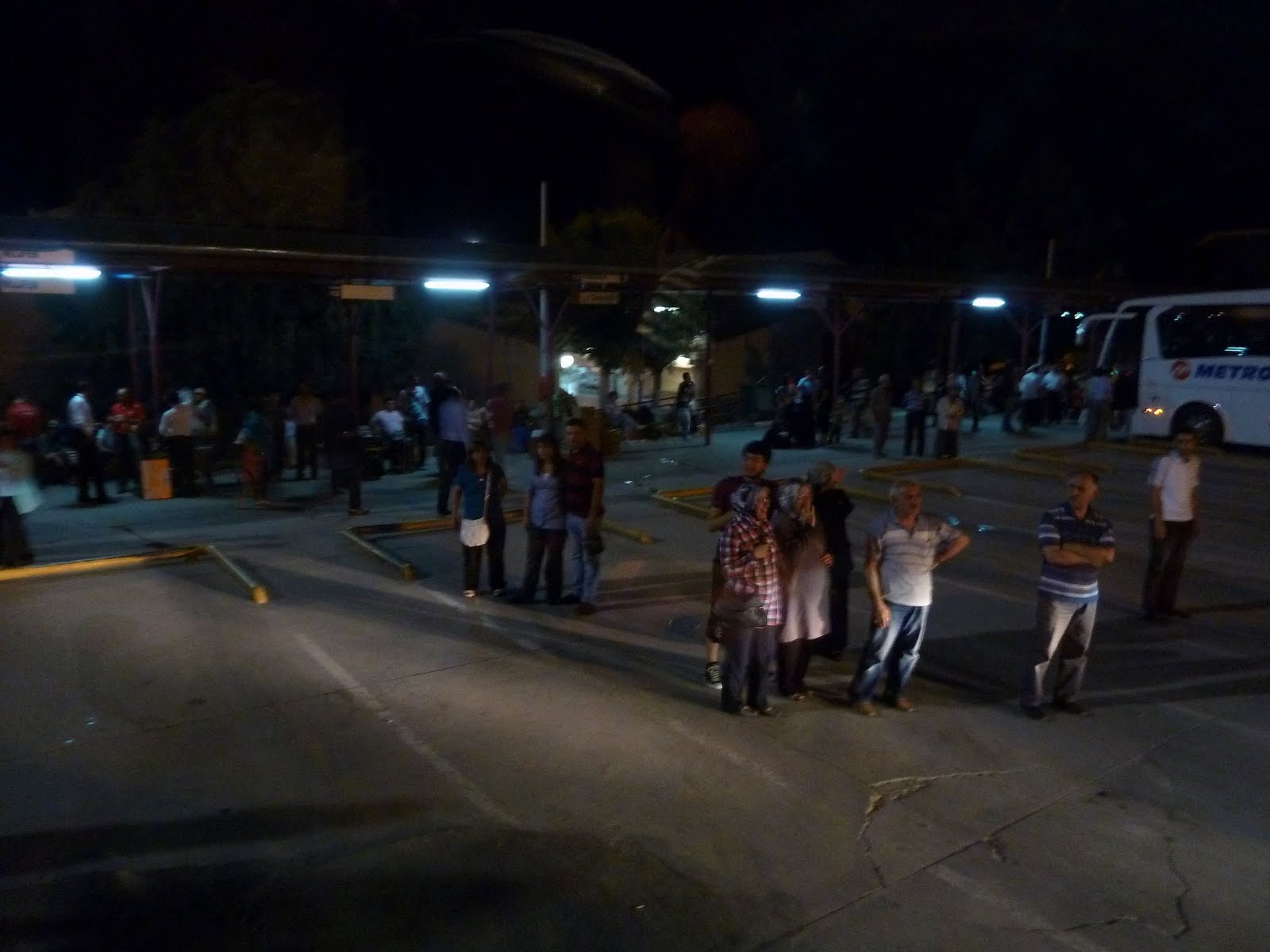
Departing the Denizli bus station on our way to Istanbul - our last night bus.
Night trips were always exhausting, but saved on time and money (didn't have to pay for a hostel those nights!) Some bus experiences were better than others, but none were as bad as the Delphi-Litochoro run. 

 Our longer bus rides were from Istanbul to Goreme, Goreme to Ankara, Ankara to Antalya, and then Denizli back to Istanbul. We used a number of different companies, but the experiences were much the same.
  1. There were personal TV monitors in the back of every chair. Every seat would have (or be given) headphones and you could select which channel you wished to watch. Some of the movies were even American, though, of course, they had been dubbed over in Turkish. Still, I ended up watching "Up!" about one and a half times on one journey, and it was entertaining even without understanding the words. Other recognizable shows were "Ice Age 3" and "Smurfs." Most of the other shows seemed to be Turkish in origin.
There was usually a "bus-cam" channel too, so you could watch the progress the bus was making as the driver saw it.  

  2. They would offer a snack and beverage service every few hours. Sometimes we got ice cream, sometimes cookies or crackers or cakes, along with tea or coffee or cola. This would happen about 1-3 times, depending on the length of the journey.

  3. They would stop about every 3 hours for a bathroom/food break. These tended to be rather frustrating and inconvenient, for a variety of reasons.
     i. They would usually be too soon (because you were just starting to fall asleep) or too late (because you'd already needed to pee for about an hour).
     ii. They never told us (in English, at least) how long we were going to be at each stop. So stops generally ranged from 10 minutes to 1 hour…we didn't want to wander too far, just in case it was short, but the longer ones seemed quite excessive. How long do you need to use the bathroom, purchase/eat food, and smoke several cigarettes to make up for the last three hours?
     iii. They were usually at gas station type places in the middle of nowhere…which meant that there were no options and they could charge whatever they wanted for everything. Bathrooms were usually extra (a lira or so, which did not guarantee that they would be clean or have TP). Food was, of course, vastly overpriced.

 More local buses and dolmuses we used around Goreme, Ankara, and from Antalya to Olympos to Finike to Pammukale. They also had some similar characteristics.
Riding a bus around Ankara.
  1. They tended to be rather crowded. Not too surprising, but sometimes it was a bit of a challenge fitting two extra bodies and their luggage (small though it was) aboard.
We had to share a tiny rear-facing bench on this bus to Olympus.  I was squeezed against the door and was afraid I would fall out every time the driver opened it.  
   2. The drivers (and passengers) seem to have something against using AC and/or opening windows. Sometimes they would turn on enough air for you to just start feeling comfortable…and then it would be gone again. It made for long, sweaty rides.

  3. Since we hadn't really been to any of the places where we were going, it was a bit of adventure going, stopping, and wondering if this was our stop or not? Should we get off here? I think so…but… Oddly enough, it was times like this that having a GPS along was most handy.


 Yes, all in all, we road quite a lot of buses. I feel like I rather became an expert on Turkish buses.  Someday I hope to go back and see more of the beautiful scenery that flashed by my window as we journeyed on those buses.
Sunrise from the bus window as we made our way back to Istanbul.  

Tuesday, July 5, 2011

Narnian Adventures

Something that I have found to be true in my own life is that just about any adventure you have can be, in some form or another, related to one or more of the Chronicles of Narnia (or to one of C. S. Lewis' other books).  On my lastest adventure I was accompanied by a fellow adventurer who loves Lewis almost as much as I do, and it was not uncommon for references to be made to the books and similarities pointed out.  For your literary enjoyment, I will point out a few of those similarities here.  

     Lucy was, of course, barefoot, having kicked off her shoes while swimming, but that is no hardship if one is going to walk on downy turf.  It was delightful to be ashore again and to smell the earth and grass, even if at first the ground seemed to be pitching up and down like a ship, as it usually does for a while if one has been at sea.  It was much warmer here than it had been on board and Lucy found the sand pleasant to her feet as they crossed it.  There was a lark singing.

    They struck inland and up a fairly steep, though low, hill.  At the top, of course, they looked back, and there was the Dawn Treader shining like a great bright insect and crawling slowly northwestward with her oars.  Then they went over the ridge and could see her no longer.
    Doorn now lay before them, divided from Felimath by a channel about a mile wide; behind it and to the left lay Arva.  The little white town of Narrowhaven on Doorn was easily seen.
~The Voyage of the Dawn Treader, Chapter 3
When one spends time on a sailboat, one cannot help but draw comparisons to the Dawn Treader.  We felt, as Lucy, the delight of being on shore again after a few days on the boat - though the solid ground did feel funny.  I even like to imagine that Lewis modeled some of his islands after the Greek Islands: grassy hills, more goats than people (on some), white towns, and from the tops of those hills, a view of our boat, shining in the harbor.  We failed to meet pirates, sea-serpents, or dragons, but we did experience stormy weather, a damaged boat, and limited water rations.


     I had been wandering for hours in similar mean streets, always in the rain and always in evening twilight.  Time seemed to have paused on that dismal moment when only a few shops have lit up and it is not yet dark enough for their windows to look cheering.  And just as the evening never advanced to night, so my walking had never brought me to the better parts of the town.  However far I went I found only dingy lodging houses, small tabacconists, hoardings from which posters hung in rags, windowless warehouses, goods stations without trains, and bookshops of the sort that sell The Works of Aristotle.  I never met anyone. 
~The Great Divorce,  Chapter 1
"How did you like Athens?" has been a common question over the past month or so since I left Athens.  The best answer I've found is a comparison I made while there: it reminds me of the grey town in The Great Divorce.  The historical sites are great, but the modern town itself...  It's kind of dirty, covered with graffiti, the streets go on an on, each with a few of the same little dingy shops open (but more places closed than open), and as far as you walk, nothing changes, and you never get to a better part of town.  It's not eternally raining and not eternally twilight, but apart from that, the description fits pretty well.


     At first Shasta could see nothing in the valley below him but a sea of mist with a few domes and pinnacles rising from it; but as the light increased and the mist cleared away, he saw more and more.  A broad river divided itself into two streams and on the island between them stood the city of Tashbaan, one of the wonders of the world.  Round the very edge of the island, so that the water lapped against the stone, ran high walls strengthened with so many towers that he soon gave up trying to count them.  Inside the walls the island rose in a hill, and every bit of that hill, up to the Tisroc's palace and the great temple of Tash at the top, was completely covered in buildings: terrace above terrace, street above street, zigzag roads or huge flights of steps bordered with orange trees and lemon trees, roof gardens, balconies, deep archways, pillared colonnades, spires, battlements, minarets, pinnacles.  And when at last the sun rose out of the sea and the great silver-plated dome of the temple flashed back its light, he was almost dazzled.  
~The Horse and His Boy, Chapter 4
Apparently Lewis modeled Calormen after Turkey.  I have to say that I liked Turkey quite a lot, while no one, probably not even Calormens, like Calormen.  That aside, similarities can still be seen, and this discription of Tashbaan sounds a lot like what I imagine the Golden Horn of Istanbul was like during the time of the Ottomans.  A walled hill, surrounded by water (not quite an island), topped by Topkapi palace and mosques instead of the temple.

It is also worth noting that "aslan" is the Turkish word for "lion" and thus it was not uncommon to come across places like "Aslan Tourism" or "Aslan Cafe."


     But it was a queer city.  The lights were so few and far apart that they would hardly have done for scattered cottages in our world.  But the little bits of the place which you could see by the lights were like glimpses of a great seaport.  You could make out in one place a whole crowd of ships loading or unloading; in another, bales of stuff and warehouses; in a third, walls and pillars that suggested great palaces or temples; and always, wherever the light fell, endless crowds: hundreds of Earthmen....The City was as quiet, and nearly as dark, as the inside of an anthill.  
~The Silver Chair,  Chapter 10
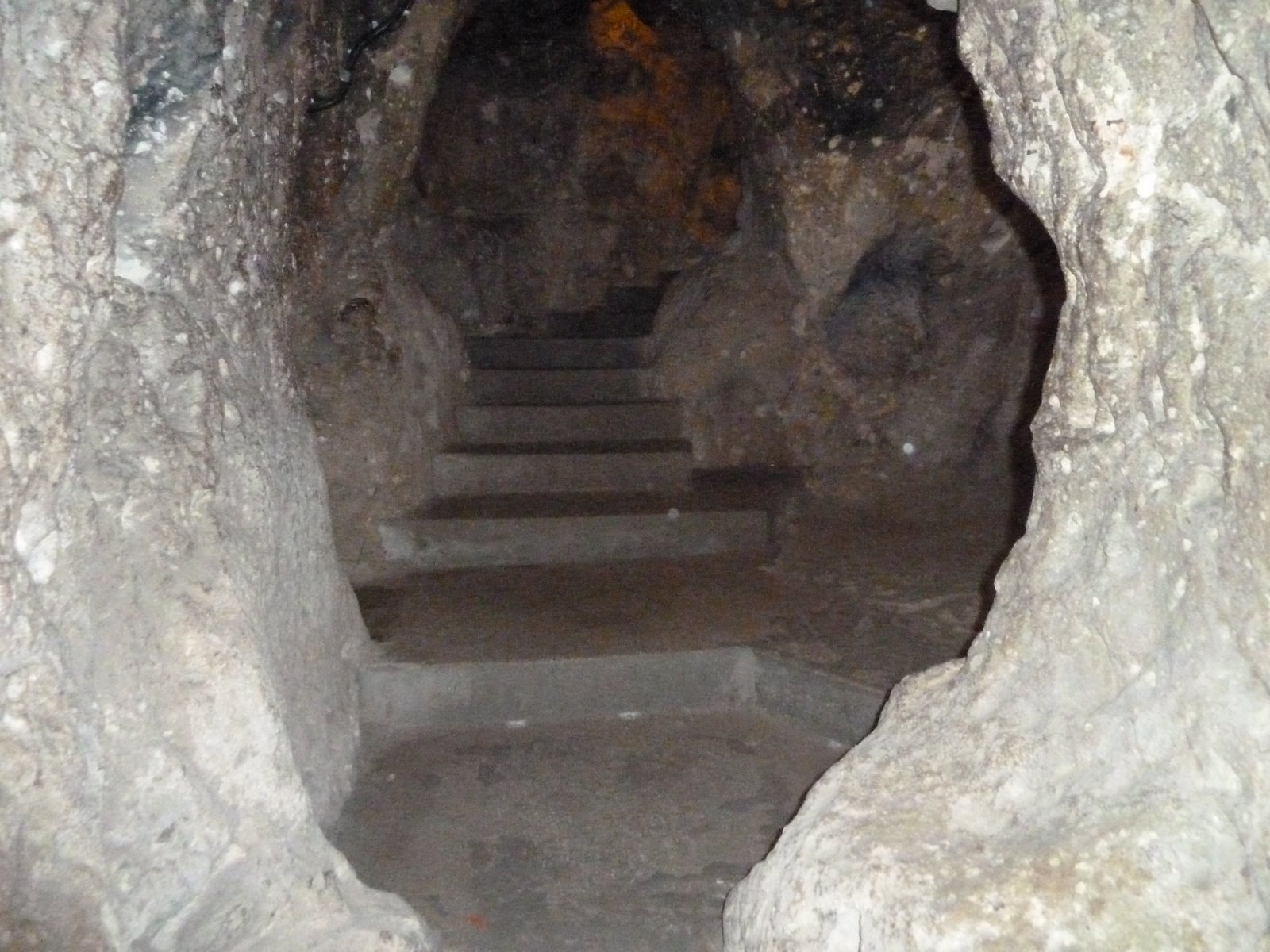
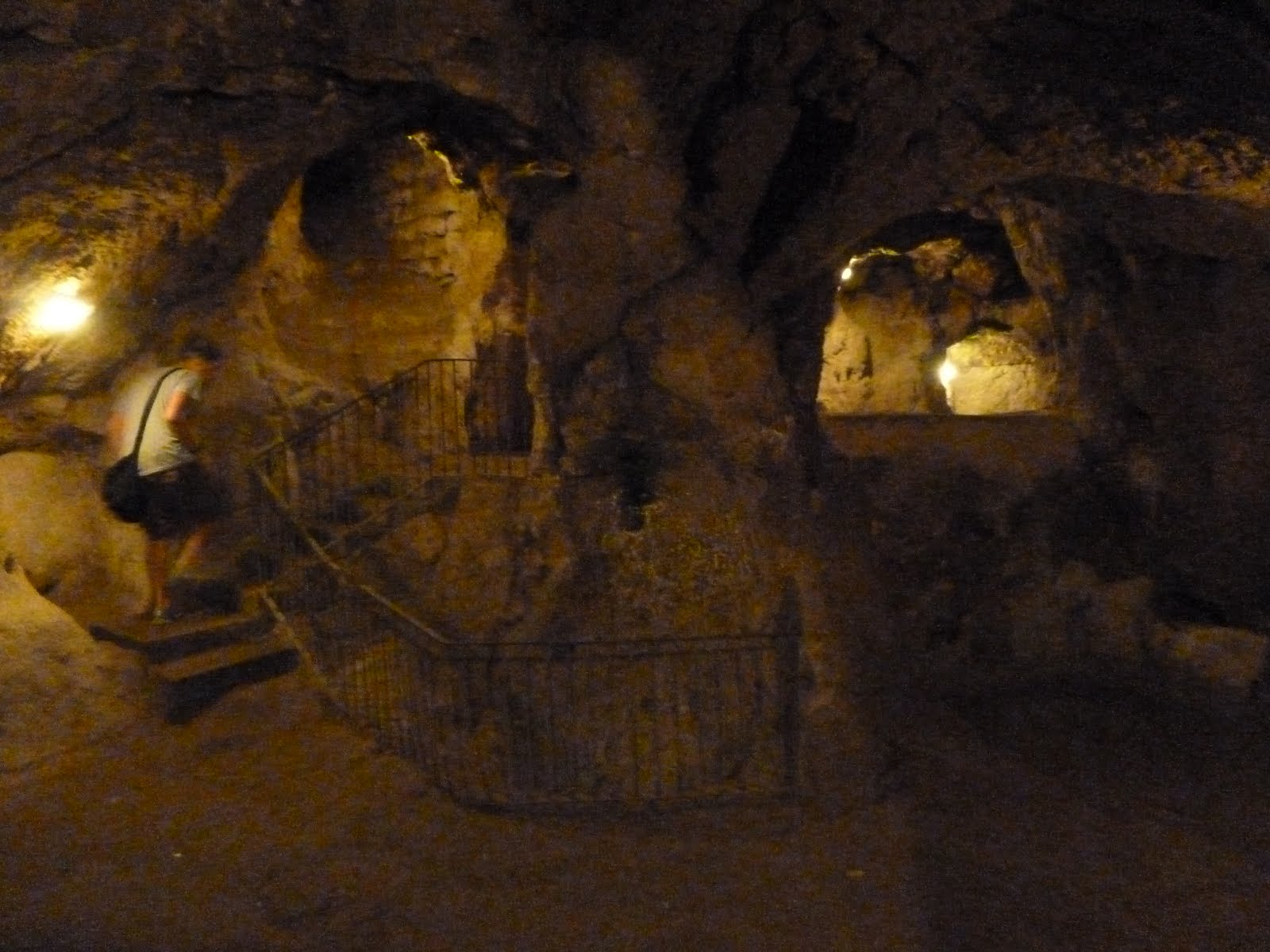
The underground city we visited in Cappadocia was nothing like the one described here, being merely a series of tunnels, rooms, and passage ways - nothing like a cave large enough to contain a whole city.  Still, one could get a sense of what a relief it must have been for Jill, Eustace, Puddleglum, and Rilian to find themselves above ground, free to move and breath, rejoicing in the light of the sun and moon.  Apparently there are around 100 such underground cities all around that region of Turkey.  It's hard to imagine that many people living that deep underground, buried alive with all their animals, self-sufficient in their caves for long enough to avoid whatever enemies troubled them.  


     Pressing their way between the laden branches they reached the wall.  It was very old, and broken down in places, with moss and wallflowers growing on it, but it was higher than all but the tallest trees.  And when they came quite close to it they found a great arch which must once have had a gate in it but was not almost filled up with the largest of all the apple trees.  They had to break some of the branches to get past, and when they had done so they all blinked because the daylight became suddenly much brighter.  They found themselves in a wide open place with walls all around it.  In here there were no trees, only level grass and daisies, and ivy, and gray walls.  It was a bright, secret, quiet place, and rather sad; and all four stepped out into the middle of it, glad to be able to straighten their backs and move their limbs freely.
~Prince Caspian, Chapter 1
Visiting the ruins at Olympos felt almost as if we'd stumbled upon the ruins of Cair Paravel.  The sun soaked stones, overgrown with trees and vines, stood near the sea, abandoned and unused for centuries.   We kept expecting to find a treasure room and have to rescue a dwarf from some hostile Telmarines.  Instead, the most threatening creature we came across was a large toad.  


     Tirian looked and saw the queerest and most ridiculous thing you can imagine.  Only a few yards away, clear to be seen in the sunlight, there stood up a rough wooden door, and round it, the framework of the doorway: nothing else, no walls, no roof.  He waled toward it, bewildered, and the others followed, watching to see what he would do.  He walked round to the other side of the door.  But it looked just the same from the other side: he was still in the open air, on a summer morning.  The  door was simply standing up by itself as if it had grown there like a tree.  
~The Last Battle, Chapter 13
Here and there, wandering around ancient ruins, one will happen across something like this: the walls and ceiling crumbled away years ago, but the doorway is still standing (though usually not with a door still hung in it).  Though you know it doesn't go anywhere, it's hard not to imagine that it might be a door to other worlds - maybe even to Aslan's country!

Monday, June 13, 2011

A few highlights

So many things are constantly happening that I'm afraid I've fallen a bit behind in updates.  Here are a few highlights from the last week.

1. Hiking around the beautiful area of Goreme:
a. The Open Air Museum
b. Pigeon valley and the nearby Castle, guarding the Silk Road

c. Rose Valley

2. Successfully using public transportation to go to the underground city at Derinkuyu.

3. Seeing old friends (and meeting some new ones) in Ankara and getting a taste of their lives there.  Plus, getting to stay in a house with laundry facilities instead of a crowded hostel.  :)

4. Trying new foods (sometimes with the advice of people who know Turkish) including manti and ayran and always doners.

5. Visiting various museums
Ethnographic Museum
History of Anatolia Museum
Museum in Antalya
 6. Eating cherries...and having a seed spitting contest.

 7. Seeing the mountains and waterfalls around Antalya

 8. Seeing and experiencing parts of Turkey - it's very beautiful.

Tuesday, June 7, 2011

Hagia Sophia

It's probably one of the largest and oldest churches I've been in (and I've had my share of large, ancient churches).  It's also no longer a church.  As a museum, on a Sunday morning it was filled with people of all faiths, marveling at the decorations and architecture.

Since the book of Revelation had been written to people in this region nearly 2000 years ago, I found a quiet corner and read a few chapters to myself.  

In a part of the world so deceived by Satan's lies, with reminders of his falsehoods everywhere...
this verse stood out:

And the devil who had deceived them was thrown into the lake of fire and sulfur where the beast and the false prophet were, and they will be tormented day and night forever and ever.  ~Revelations 20:10 
In a dark and hopeless world, Revelation offers an abundance of hope.  The Kingdom of God will prevail.  Hagia Sophia may now be filled with people from various tribes, tongues, and nations, merely marveling at a beautiful building, but someday a similar group will sing praises around the throne of God.  

No longer will there be anything accursed, but the throne of God and of the Lamb will be in it, and his servants will worship him.  They will see his face, and his name will be on their foreheads. And night will be no more. They will need no light of lamp or sun, for the Lord God will be their light, and they will reign forever and ever.   ~Revelation 22: 3-5


Wednesday, June 1, 2011

Istanbul!

There came a breaking point.  A point where we said, "Enough is enough!"  A point when we rolled up our bedrolls, saddled our horses, and rode into the sunrise. 


When we arrived in Istanbul after taking a night bus out of Thessaloniki, there was great rejoicing.
And we had food and tea to celebrate.  

We had a little trouble figuring out the metro system, but helpful people seemed abundant, and soon we came to Sultanahmet and to our hostel with this window view:
Yes, that is Hagia Sophia.  Rough life?  Yes.  
After a long night on the bus we took it pretty easy that day, just strolling around a little, but not trying to see any major sites.


After a good nights rest, Wednesday morning we were ready to go.  

We first headed to Topkapi Palace, only to discover that the line was longer than a lightyear (well, not really, but it was long) so we diverted our plans and went first instead to the Archaeological Museum.  

I may as well tell you right now, so you are not under any false impressions, that I am a total geek and that visiting the Istanbul Archaeological Museum has been a dream of mine for a while now.  I blame Gabi really.  He would tell us about some interesting find from somewhere in Israel and then say, in his thick accent, "That is in the museum in Istanbul."  Basically, it was an exciting day for me.
While there were many fun and exciting things to see (and many less fun and exciting things - I find that sarcophagi and gravestones get repetitive after a while), one of the most exciting for me was to finally see the original inscription from Hezekiah's tunnel:
I know, it's not much to look at, but that's ok.  It was cool. :)

Among many other famous things, we also saw the sarcaphogus of Alexander the Great.

After a lunch of peanut butter and nutella sandwiches (finding peanut butter = another exciting event in Turkey) we decided to try the palace again, this time with better luck.

It was an interesting experience.  The treasure rooms still display some of the wealth of the Ottomans and are packed with people, ogling at the jewel encrusted swords and lamps, rings the size of two of my fingers, and a diamond not much smaller than my fist.  Who knew that so much wealth existed?


The portrait room displays paintings of the various sultans, like any proper landed family in England displaying their ancestors.

They also have a room with the Sword of the Prophet David, the Staff of the Prophet Moses, the hand and head of John the Baptist, and several hairs from the Beard of the Prophet.

With all that, I think I still liked the garden best.

It was strange, but everything - the towers and turrets, the family portraits, the treasure rooms and jewel-encrusted whatever reminded me more than I expected of fairy tales and stories of European royalty.  I suppose I shouldn't have been surprised, but they were more similar than I expected - just with a few twists, here and there.

A meal on a rooftop was a good way to conclude the day, with the sun setting over the city,
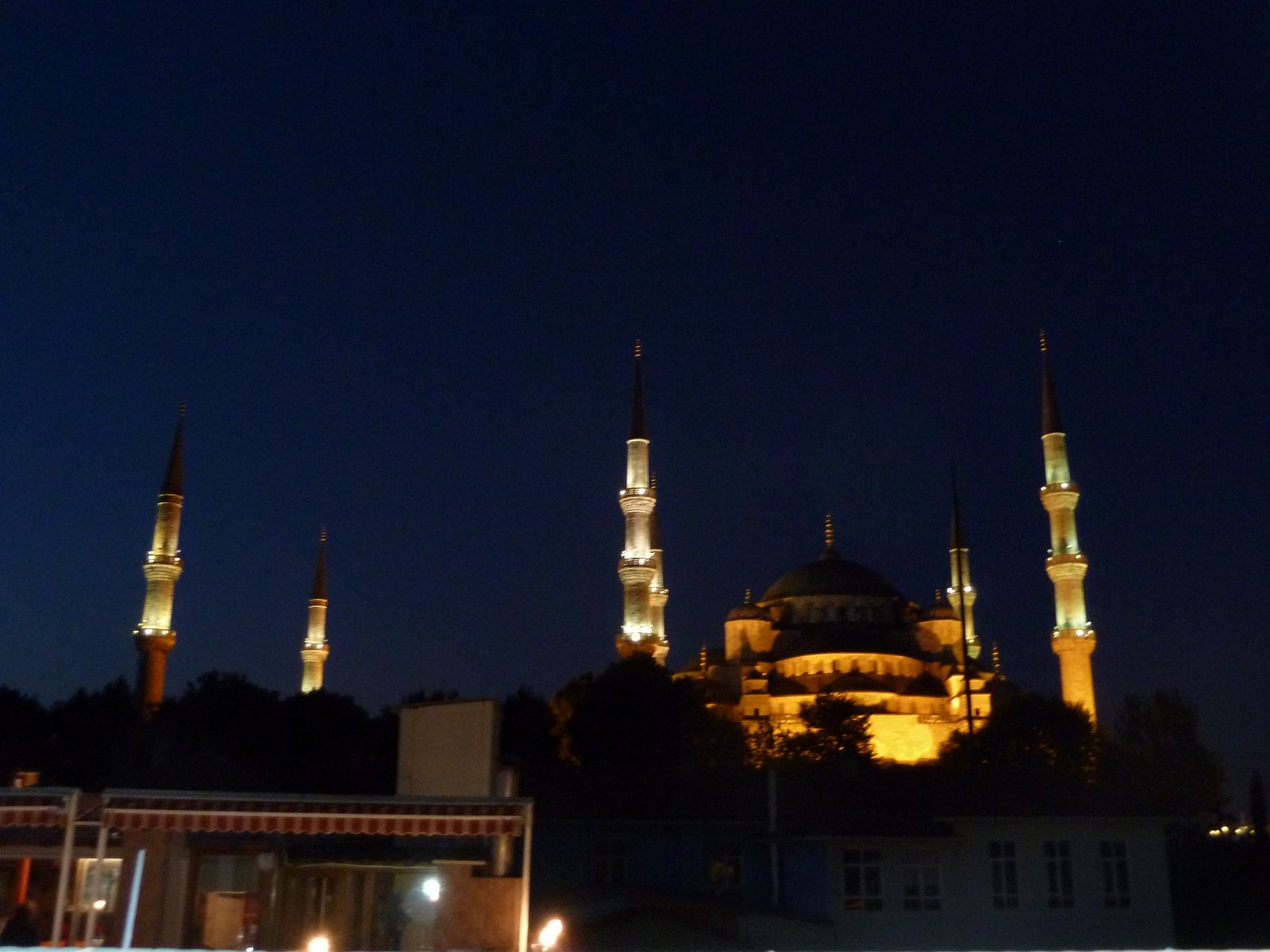
and the Blue Mosque lit up for the night.


Yeah, Istanbul is pretty cool.  

Saturday, May 14, 2011

Ephesus

Six hours is about as long as I've ever spent at any one site (at least in one day), but that's how long we were at Ephesus today.  And with good reason.  It's a huge site with lots to see, even if your group doesn't wile away time on discussions of Roman citizenship.

We left our hotel at 7:30 with three cruise ships already at the docks,
hoping to beat at least some of the crowds.  We did, but not for long.  Ephesus is the most crowded archaeological site I've ever been to.  We saw most of the usual sights:
the Library:
the Theater:
and the terrace houses:
all of which were pretty sweet.  We also saw some more unusual sights, including
Bugs:
Owls:
and the "Cave of Paul" - only recently discovered and shown only to special people.  (Our guide had a connection with the former archaeologist of Ephesus who gave us a personal tour.)  The cave dates to about the 5th century AD, but the frescos of Paul, Jesus, and others may be later.  There is evidence of a Christian presence here until the 19th century. 

Once we finished with Ephesus we visited a carpet factory.  We felt a little guilty that none of us bought anything, but it was fascinating to see the process of how carpets are made, as well as where silk comes from.  

We also visited the Ephesus Museum, St. John's Basillica:
and the Temple of Artemis:

Thought for the day:
As we were going through Ephesus I tried to read through Ephesians.  I came across this passage:
Ephesians 2:17-22
And he came and preached peace to you who were far off and peace to those who were near. For through him we both have access in one Spirit to the Father.  So then you are no longer strangers and aliens, but you are fellow citizens with the saints and members of the household of God, built on the foundation of the apostles and prophets, Christ Jesus himself being the cornerstone, in whom the whole structure, being joined together, grows into a holy temple in the Lord.   In him you also are being built together into a dwelling place for God by the Spirit.

We had just learned in the library how buildings were "joined together" then.  It involved making groves or drilling holes and pouring in molten lead to seal the two blocks together.  
Ephesians would have seen this done many times, probably on the numerous temples that graced the city, if not elsewhere.  The picture in their minds would have been very clear, and it would have drawn a sharp contrast between them, a living temple, and the pagan world around them that worshipped false gods in temples of stone.  

Now off to bed and on to more sites tomorrow!